


Duke International Faculty Database
Explore the range of faculty engagement with world regions and global issues by browsing the Faculty Database System or by searching for particular keywords (major world area, country, research topic, etc).
While the Duke International website strives to provide a comprehensive listing of Duke faculty with international research interests, you may also find additional information by exploring school-specific faculty listings
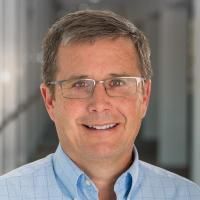
Peter D. Feaver, Professor, Political Science
| Office Location: | |
| Office Phone: | (919) 660-4331 |
| Email Address: |   |
Teaching (Fall 2026):
- POLSCI 113CCD.001, AMERICA IN THE WORLD
Synopsis
- Physics 130, MW 10:20 AM-11:10 AM
- POLSCI 113CCD.02D, AMERICA IN THE WORLD
Synopsis
- Social Sciences 119, F 10:20 AM-11:10 AM
- POLSCI 113CCD.03D, AMERICA IN THE WORLD
Synopsis
- Bio Sci 113, F 12:00 PM-12:50 PM
- POLSCI 562S.01, AMERICAN GRAND STRATEGY
Synopsis
- Gross Hall 111, Tu 01:40 PM-04:10 PM
- (also cross-listed as HISTORY 567S.01, PUBPOL 501S.01)
- Gross Hall 111, Tu 01:40 PM-04:10 PM
- Education:
Ph.D. Harvard University 1990 A.M. Harvard University 1986 B.A. Lehigh University 1983
- Specialties:
-
International Relations
Political Science/Government
Security, Peace, & Conflict
- Research Interests: Security Studies, Civil-Military Relations and Nuclear Weapons
Peter D. Feaver (Ph.D., Harvard, 1990) is Professor of Political Science at Duke University and Director of the Triangle Institute for Security Studies (TISS). Feaver is author of Armed Servants: Agency, Oversight, and Civil-Military Relations (Harvard Press, 2003),and co-author, with Christopher Gelpi, of Choosing Your Battles: American Civil-Military Relations and the Use of Force ( Princeton University Press, forthcoming). He is co-editor, with Richard H. Kohn, of Soldiers and Civilians: The Civil-Military Gap and American National Security (MIT Press, 2001). And he is author of Guarding the Guardians: Civilian Control of Nuclear Weapons in the United States (Cornell University Press, 1992). He has published several other monographs and over thirty articles and book chapters on nuclear proliferation, civil-military relations, information warfare, and U.S. national security. He won the Duke Alumni Distinguished Undergraduate Teaching Award in 2001 and the Trinity College Distinguished Teaching Award in 1994-95. In 1993-94, Feaver served as Director for Defense Policy and Arms Control on the National Security Council at the White House where his responsibilities included counterproliferation policy, regional nuclear arms control, the national security strategy review, and other defense policy issues. He is a Lieutenant Commander in the U.S. Naval Reserve (IRR). He is married to Karen Feaver, and they have two children, a son and a daughter.
- Keywords:
- U.S. • Political Science • Military • National Security
- Current Ph.D. Students
(Former Students)
- Nathaniel J. Harris
- Daniel Krcmaric
- Seth Cantey
- Andrew Bell
- Daniel Bessner
- Christopher Q. Barnett
- Eric B Lorber
- Recent Publications
(More Publications)
- Feaver, PD, Afterword: Trust in the Military and the Legitimacy of the All-Volunteer Force, Bend but do Not Break Shaping the Future of the all Volunteer Force (January, 2026), pp. 249-251 [doi] [abs]
- Feaver, PD, Right or Wrong? The Civil–Military Problematique and Armed Forces & Society’s 50th, Armed Forces and Society, vol. 51 no. 2 (April, 2025), pp. 507-516 [doi] [abs]
- Urben, HA, Book Review: Thanks for your service: The causes and consequences of public confidence in the U.S. military by Feaver, P. D., Armed Forces & Society, vol. 51 no. 1 (January, 2025), pp. 390-393, SAGE Publications [doi]
- Feaver, PD, Thanks for your service: The causes and consequences of public confidence in the US military (July, 2023), pp. 1-310, ISBN 9780197681121 [doi] [abs]
- Feaver, P, What Not to Worry About in the Policy–Academy Gap Debate: A Contrarian Take, Armed Forces and Society, vol. 49 no. 1 (January, 2023), pp. 20-25 [doi] [abs]