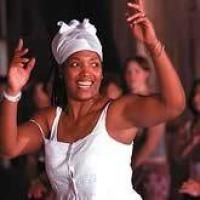
 Through my choreographic lens, I explore how the body becomes a site of memory, history, and cultural narrative. My research focuses on Black visibility in public spaces and collective memory, examining African-based dance practices of healing in the American South, Cuba, Brazil, Ecuador, and the Caribbean. These traditions, deeply intertwined with movement, inspired the co-founding of Indigo Yard Gals (IYG), a collective that engages dance, ritual, and healing as transformative practices.
 My artistic work is rooted in the transmission of African diaspora dance legacies and their evolving presence in contemporary spaces. I research, choreograph, and perform to deepen the living art of African diaspora dance, exploring its connection to personal and collective identity through the physical articulation of cultural beliefs. Dance is an expression of perseverance—a creative continuation of cultural mores. It is both political and personal.
As a founding member of the Chuck Davis African American Dance Ensemble, I ground my creative process in the understanding of dance as both a historical resource and a gesture toward futurity. As an archive, dance embodies and transmits traditions, offering present-day access to earlier forms that often persist primarily within dance-related rituals. The evolving identity of dance creates a framework for analyzing its aesthetic, technical, ceremonial, spiritual, and sacred tenets—elements that shape both traditional African and African-derived dance forms. This concept serves as the foundation of my past work and continues to inform the thematic core of my present projects.
To articulate my process, I coined the term dance translator—a methodology that examines my personal voice in dance. Using my body as text, I communicate an existing legacy of religious, spiritual, and cultural beliefs through movement. Drawing from King’s radical interdisciplinarity, Lorde’s biomythography, and Hartman’s critical fabulation, I interrogate and reimagine histories that have often been silenced. My storytelling practice binds past, present, and future, centering Black narratives through embodied memory and performance.
Through Indigo Yard Gals (IYG), I engage deeply with social justice, environmental activism, identity, and imagination. Our projects cultivate conversations that bridge community, culture, and imagined futures, widening the scope of dance, ritual, and healing as catalysts for transformation.