|
Math @ Duke
|
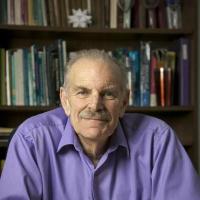
Michael C. Reed, Arts and Sciences Distinguished Professor and Bass Fellow
 - Contact Info:
Teaching (Spring 2025):
- MATH 477S.01, MATH MODELING WITH WRITING
Synopsis
- Physics 227, TuTh 10:05 AM-11:20 AM
Teaching (Fall 2025):
- MATH 431.01, INTRODUCTION TO REAL ANALYSIS
Synopsis
- Physics 119, MWF 10:20 AM-11:10 AM
- MATH 731.01, INTRODUCTION TO REAL ANALYSIS
Synopsis
- Physics 119, MWF 10:20 AM-11:10 AM
- Math 49S.01: Applications of Mathematics to
Physiology and Medicine [PDF]
- Office Hours:
- Friday, 1-2
- Education:
| Ph.D. | Stanford University | 1969 |
| Doctor of Philosophy | Stanford University | 1969 |
| Master of Science | Stanford University | 1966 |
| M.S. | Stanford University | 1966 |
| Bachelor of Science | Yale | 1963 |
| B.S. | Yale University | 1963 |
- Specialties:
-
Analysis
Applied Math
Mathematical Biology
- Research Interests: Analysis, Applications of Mathematics to Physiology and Medicine
Professor Reed is engaged in a large number of research projects that involve the application of mathematics to questions in physiology and medicine. He also works on questions in analysis that are stimulated by biological questions. For a general discussion of
the applications of mathematics to problems in biology, see
his
article,
``Why is Mathematical Biology so Hard?'' in the March, 2004,
Notices of the American Mathematical Society, pp. 338-342.
Since 2003, Professor Reed has worked with Professor Fred Nijhout (Duke Biology) to use mathematical methods to understand regulatory mechanisms in cell metabolism. Most of the questions studied are directly related to public health questions. A list of publications in this area and the corresponding pdfs are available at the website metabolism.math.duke.edu (no www).
A primary topic of interest has been liver cell metabolism where Reed and Nijhout have created mathematical models for the methionine cycle, the folate cycle, and glutathione metabolism. The goal is to understand the system behavior of these parts of cell metabolism. The models have enabled them to answer biological questions in the literature and to give insight into a variety of disease processes and syndromes including: neural tube defects, Down’s syndrome, autism, vitamin B6 deficiency, acetaminophen toxicity, and arsenic poisoning.
A second major topic has been the investigation of dopamine and serotonin metabolism in the brain. The biochemistry of these neurotransmitters affects the electrophysiology
of the brain and the electrophysiology affects the biochemistry. Both affect gene expression and behavior. In this complicated situation, especially because of the difficulty of experimentation, mathematical models are an essential investigative tool that can shed like on questions that are difficult to get at experimentally or clinically.
This work has been done by Reed and Nijhout jointly with Janet Best, a mathematician at Ohio State. The models have shed new light on the mode of action of selective serotonin reuptake inhibitors (used for depression) and the interactions between the serotonin and dopamine systems in Parkinson’s disease.
Other areas in which Reed uses mathematical models to understand physiological questions include: models of pituitary cells that make luteinizing hormone and follicle stimulating hormone, models of the mammalian auditory brainstem, models of maternal-fetal competition, models of the owl’s optic tectum, and models of insect
metabolism.
Often, problems in biology give rise to new questions in pure mathematics. Examples of work with collaborators on such questions follow:
Laurent, T, Rider, B., and M. Reed (2006) Parabolic Behavior of a Hyberbolic Delay Equation, SIAM J. Analysis, 38, 1-15.
Mitchell, C., and M. Reed (2007) Neural Timing in Highly Convergent Systems, SIAM J. Appl. Math. 68, 720-737.
Anderson,D., Mattingly, J., Nijhout, F., and M. Reed (2007) Propagation of Fluctuations in Biochemical Systems, I: Linear SSC Networks, Bull. Math. Biol. 69, 1791-1813.
McKinley S, Popovic L, and M. Reed M. (2011) A Stochastic compartmental model for fast axonal transport, SIAM J. Appl. Math. 71, 1531-1556.
- Current Ph.D. Students
(Former Students)
- Shalla Hansen
- Ezgi Temamogullari
- Postdocs Mentored
- Lydia Bilinsky (August 01, 2013 - present)
- Badal Joshi (2009/08-2012/07)
- Garrett Mitchener (2004 - 2006)
- Paula Budu (2002/09-2005/08)
- Talitha Washington (2001/09-2004/08)
- Monica Romeo (2001/09-2004/08)
- Tracy Jackson (1999/08-2000/07)
- Patrick Nelson (1999/08-2000/07)
- Kirill Skouibine (1998/09-2000/08)
- Recent Publications
(More Publications)
- Best, J; Kim, R; Reed, M; Nijhout, HF, A mathematical model of melatonin synthesis and interactions with the circadian clock.,
Mathematical biosciences, vol. 377
(November, 2024),
pp. 109280 [doi] [abs].
- Mena, S; Cruikshank, A; Best, J; Nijhout, HF; Reed, MC; Hashemi, P, Modulation of serotonin transporter expression by escitalopram under inflammation.,
Communications biology, vol. 7 no. 1
(June, 2024),
pp. 710 [doi] [abs].
- Buchanan, AM; Mena, S; Choukari, I; Vasa, A; Crawford, JN; Fadel, J; Maxwell, N; Reagan, L; Cruikshank, A; Best, J; Nijhout, HF; Reed, M; Hashemi, P, Serotonin as a biomarker of toxin-induced Parkinsonism.,
Molecular medicine (Cambridge, Mass.), vol. 30 no. 1
(March, 2024),
pp. 33 [doi] [abs].
- Duncan, W; Antoneli, F; Best, J; Golubitsky, M; Jin, J; Nijhout, HF; Reed, M; Stewart, I, Homeostasis Patterns,
SIAM Journal on Applied Dynamical Systems, vol. 23 no. 3
(January, 2024),
pp. 2262-2292 [doi] [abs].
- Suzuki, A; Henao, R; Reed, MC; Nijhout, HF; Tripathi, M; Singh, BK; Yen, PM; Diehl, AM; Abdelmalek, MF, Lower hepatic CBS and PEMT expression in advanced NAFLD: inferencing strategies to lower homocysteine with a mathematical model,
Metabolism and Target Organ Damage, vol. 4 no. 3
(January, 2024) [doi] [abs].
|
|
|
|
dept@math.duke.edu 
ph: 919.660.2800
fax: 919.660.2821
| |
 Mathematics Department Mathematics Department
Duke University, Box 90320
Durham, NC 27708-0320
|
|



